Rings And Bands
Enquiries may include rings, wedding bands, bent settings and pieces with visible hallmarks.

Common enquiry types
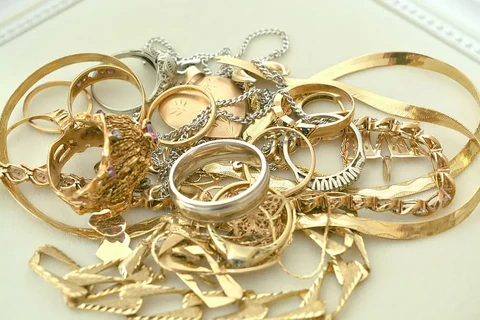
Jewellery enquiries commonly involve wearable, damaged and incomplete pieces.
Enquiries may include rings, wedding bands, bent settings and pieces with visible hallmarks.
Chains, necklaces, pendants and lockets may include clasps, solder, stones or mixed components.
Wearable, damaged and incomplete bracelets or bangles can be described in an assessment enquiry.
Single earrings, mismatched sets, stone-set items and mixed-material pieces may need individual review.
Assessment factors
A jewellery assessment separates measurable gold content from item characteristics that may need individual review.
The live gold price in AUD provides market context, but it is not the amount automatically paid for a piece of jewellery.
Live gold prices
View indicative scrap gold jewellery buyback pricing by karat using the current Bullion Hub price table.
| Karat Gold Purity | We Pay You |
|---|---|
| 24ct Gold per gram (99.99% Pure) | Loading... |
| 22ct Gold per gram (91.6% Pure) | Loading... |
| 21ct Gold per gram (87.5% Pure) | Loading... |
| 20ct Gold per gram (83.3% Pure) | Loading... |
| 18ct Gold per gram (75% Pure) | Loading... |
| 15ct Gold per gram (62.5% Pure) | Loading... |
| 14ct Gold per gram (58.3% pure) | Loading... |
| 10ct Gold per gram (41.6% Pure) | Loading... |
| 9ct Gold per gram (37.5% Pure) | Loading... |
| 8ct Gold per gram (33.3% Pure) | Loading... |
Prices are calculated from live metal pricing and update automatically. Final in-store valuations depend on testing, weight, purity and item condition.
Choose the right pathway
Jewellery assessment considers the individual piece. Scrap-gold intent focuses more directly on recoverable metal, purity, weight and per-gram pricing.
| Focus | What It Covers |
|---|---|
| Individual piece | Construction, condition and components are reviewed item by item. |
| Gold content | Confirmed purity and net gold weight shape the metal-content basis. |
| Other factors | Stones, brand, age or design may need a separate specialist assessment. |
| Seller decision | Ask which factors are included before deciding whether to proceed. |
| Focus | What It Covers |
|---|---|
| Recoverable metal | Purity, weight and recoverable gold are central to the assessment. |
| Price intent | Detailed per-gram and karat pricing belongs with scrap-gold content. |
| Broken jewellery | Broken pieces can sit in either pathway, depending on the assessment scope. |
Before an assessment
A small amount of preparation makes it easier to understand how each item is handled.
Group matching items and keep separate pieces in clearly labelled bags or containers.
Note visible hallmarks, but do not clean, scratch or alter the jewellery to find them.
Gather receipts, certificates, packaging or provenance information if available.
Describe stones, mixed metals, repairs or missing parts when making your enquiry.
Confirm eligibility, visit arrangements, identification, assessment method and settlement options.
Ask for the quote basis to be explained before deciding whether to proceed.
Item condition and history
Damage does not remove the gold contained in a piece. A broken chain, bent ring, single earring or incomplete set may still have measurable gold content even if it is no longer wearable.
Inherited jewellery can require a different decision. Sentimental history does not automatically change the gold content, while age, maker, stones or design may call for specialist review.
FAQs
You can ask a Melbourne precious-metals buyer such as Bullion Hub to assess gold jewellery. Before attending, confirm the item type, current visit arrangements, identification requirements and how the quote will be calculated.
The core factors are confirmed gold purity, net gold weight and the current market context. Stones, mixed metals, repairs, condition, brand, age and design may also require separate consideration.
Broken jewellery can retain gold content even when it cannot be worn. Contact Bullion Hub with a description of the piece and confirm whether its metal, condition and components are suitable for assessment.
Do not assume they are included. Ask whether the quote covers only the gold content or also considers stones, brand, age, design or resale characteristics.
No. The live gold price is a market reference for pure gold. A jewellery quote also depends on confirmed purity, net gold weight and the applicable buying rate.
Prepare the items, note visible hallmarks and gather any receipts, certificates or provenance you already have. Confirm eligibility, identification, visit arrangements and settlement options before travelling.
Next step
Describe the item type, visible hallmark, approximate number of pieces and whether the jewellery contains stones or mixed materials.
Ask the team to confirm eligibility, visit arrangements, identification, assessment method and settlement options before you attend.
For bullion, coins or mixed gold, see Bullion Hub's guide to selling gold in Melbourne.