
How To Buy Gold Coins In Australia
Gold coins can be a great investment for many reasons. Some like the collectability, some might like the smaller size.
But before buying any gold coin in Australia, you’ll need to check its fine-gold content, total premium, authenticity, likely resale liquidity and any storage requirements. Like everything, in the end the right choice depends on why you are buying and how you may eventually sell.
Note that the following is general information and is not personal financial, legal or tax advice.
Start With Why You Are Buying Gold Coins
Your objective determines which product features deserve the most weight.
- Gold exposure: focus on fine-gold weight, total premium and resale recognition.
- Flexible resale: consider whether smaller coins would let you sell part of a holding rather than all of it.
- Collecting: rarity, mintage, condition and provenance as well as the gold content.
- Gifting: presentation and design may be relevant, although these features can increase the premium.
It may be a mix of the above factors, or just one. Regardless, the purpose of your purchase can change what you look for in a gold coin.
If you are ready to compare products, browse Bullion Hub’s current gold coin range and check each listing against those criteria.
Bullion Coins And Collectable Coins Are Different Purchases
Bullion coins are primarily priced by their precious-metal content plus a minting and dealer premium.
Collectable or numismatic coins on the other hand can carry additional value based on their rarity, condition, provenance, design and collector demand.
The Australian Border Force guidance on precious metals and coins also distinguishes tradeable investment precious metals from collector coins. For collector coins, rarity and condition can influence the value.
Ask the dealer to separate the metal value from the rest of the premium. You can then see whether you are paying mainly for gold or for collectability.
Check The Gold Content Before Comparing Prices
Price comparisons are only useful when the coins contain the same amount of fine gold. Bullion Hub can test this for you if you’re looking to sell your gold.
When buying, a dealer gives you confidence in your purchase by validating gold content and other concerns.
Purity, Gross Weight And Fine-Gold Weight
Purity essentially describes how much of a coin is gold. It may be shown as fineness, such as 999.9, or as carat.
A 999.9 coin is 99.99% gold. A 22-carat coin contains gold alloyed with another metal.
Gross weight includes every metal in the coin. Fine-gold weight counts only the gold. A lower-fineness bullion coin can still contain one troy ounce of fine gold because its gross weight is higher.
So when you’re looking to purchase, check the product specifications for:
- fineness or carat
- gross weight
- fine-gold weight
- diameter and thickness
- mint or issuer
Use fine-gold weight as the common unit when comparing gold prices.
Face Value Does Not Set The Market Value
A legal-tender denomination is not the coin’s market price. A coin with a $100 face value may sell for far more because of its gold content, dealer premium and any collector demand.
Collector demand can drive massive price swings. If you’re at all familiar with Pokemon card collecting, you’ll know exactly what I am talking about here.
Compare The Total Cost, Not Just The Gold Price
Start with the live gold price in Australian dollars, then add the dealer premium and any payment or delivery charges.
Acquisition cost = gold value + dealer premium + payment and delivery costs
Add storage and insurance when comparing the total cost of ownership.
Coins with the same fine-gold weight can still have different purchase costs. Compare the premium in dollars and as a percentage of the metal value.
If the gold content is worth $6,000 and the coin costs $6,250, the premium is $250, or 4.17%, before delivery, storage and insurance.
Spot Price, Premium And Buyback Spread
A coin’s premium is the amount charged above its metal value. It can cover minting, wholesale supply, distribution, dealer costs and limited availability.
The buyback spread is the gap between what you pay and what the dealer would pay to buy the coin back. Ask for the retail and indicative buyback prices for the same coin on the same day.
Delivery, Payment, Insurance And Storage Costs
Also check the quote and terms for:
- quote validity or the price-lock period
- accepted payment methods and settlement timing
- card or payment surcharges
- insured delivery charges
- minimum order thresholds
- collection arrangements
- storage fees
- insurance limits or exclusions
Before paying, confirm when the delivery risk passes to you. Keep the invoice, payment receipt and delivery record.
Choose A Coin Size That Fits Your Exit Plan
One-ounce coins often cost less per ounce. Fractional coins cost less per coin and allow a smaller portion of the holding to be sold, but usually carry a higher premium per ounce.
Current fractional examples include Bullion Hub’s 1/4 oz 1993 Perth Mint Whiptail Wallaby and 1/2 oz 1999 Perth Mint Australian Nugget. Check each product page for current availability and pricing.
| Consideration | One-Ounce Coins | Fractional Coins |
|---|---|---|
| Premium per ounce | Often lower | Often higher |
| Partial sale flexibility | Lower | Higher |
| Number of items to store | Fewer | More |
| Entry cost per coin | Higher | Lower |
Cost per ounce gives the fairer comparison. Perth Mint guidance on fractional coins says smaller coins generally carry a higher premium over spot and allow smaller amounts to be sold.
Verify The Dealer And The Coin
Verify the business as well as the product.
Before paying, check:
- the dealer’s registered business identity and contact details
- a transparent price and product specification
- whether the item is new or previously owned and what documentation is included
- delivery, return and cancellation terms, including how authenticity is checked
- whether the dealer publishes or explains buyback terms
Depending on the transaction and risk assessment, a regulated bullion dealer may be required to collect and verify identity and other customer information under Australia’s anti-money laundering and counter-terrorism financing rules. AUSTRAC’s bullion dealer overview explains the framework.
Do not rely on photos, packaging or a certificate alone. Check the weight, dimensions and markings against the issuer’s published specification, and ask how the dealer tests coins it buys. Bullion Hub’s guide to buying gold safely in Australia covers the broader transaction checks.
Decide How You Will Store And Insure It
Choose the storage method before collection or delivery.
Home storage, a safe deposit facility and a specialist allocated-storage service differ in access, insurance, fees, ownership records and withdrawal rules. Confirm the insurance wording and keep invoices and identifying product details separately from the coins.
A Quick Seven-Step Checklist For Buying Gold Coins
- Define whether you are buying for bullion value, collecting, gifting or smaller resale units.
- Choose between bullion and collectable coins.
- Verify purity, gross weight and fine-gold weight.
- Compare the acquisition cost and ongoing ownership costs.
- Check the dealer, product provenance and authentication process.
- Confirm delivery, storage, insurance and buyback terms.
- Retain the invoice, specifications, payment record and delivery documents.
Keep the invoice and product records. A dealer, insurer or tax professional may ask for them later. Selling a gold coin can also have CGT consequences, so retain acquisition, ownership and disposal records and obtain advice for your circumstances.
Common Mistakes To Avoid
- Using face value as a guide to market value.
- Comparing gross weight instead of fine-gold weight.
- Paying a collector premium without intending to collect.
- Ignoring premiums, spreads and other ownership costs.
- Assuming every high-purity coin receives the same GST treatment.
- Buying without checking provenance, specifications or dealer details.
- Taking delivery without arranging storage, insurance and recordkeeping.
Frequently Asked Questions
What Are The Best Gold Coins To Buy In Australia?
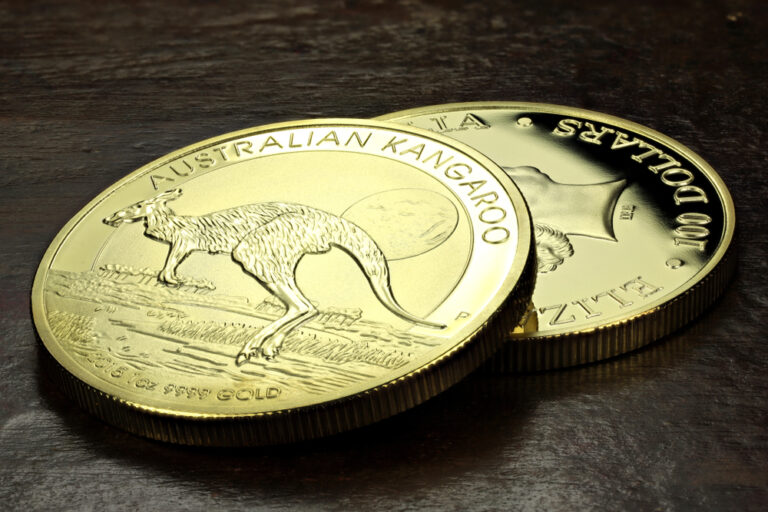
Bullion buyers usually prioritise fine-gold weight, issuer recognition, transparent pricing, authentication, premium and resale demand. Widely recognised issues such as the Australian Kangaroo give dealers a familiar product to identify and price. Collectors place more weight on rarity, condition and provenance.
Are Australian Gold Coins Real Gold?
Many modern Australian bullion coins are high-purity gold. Perth Mint, for example, lists Australian Kangaroo and other bullion coins with 99.99% purity. Bullion, collectable and circulating coins vary, so check the specification for the individual product. “Gold coin” is not a purity specification.
Is It Better To Buy Gold Coins Or Gold Bars?
Coins often offer smaller resale units and recognisable designs. For a fair comparison with a bar, use the same fine-gold weight and check the premium, storage footprint and likely resale process.
Do You Pay GST On Gold Coins In Australia?
Not always. Under the ATO’s GSTR 2003/10 guidance, a gold coin that is at least 99.5% fine and in investment form can meet the GST Act definition of “precious metal”. A qualifying coin is generally sold to a retail buyer without a separate 10% GST charge. The first qualifying supply after refining may be GST-free, while later supplies are generally input taxed. Coin form or legal-tender status alone does not decide the result, and non-qualifying coins may be taxable. Obtain personal tax advice for your circumstances.
Where Can You Buy Gold Coins In Australia?
Gold coins are sold online and in person by recognised mints and established bullion dealers. The Royal Australian Mint sells investment coins directly and through authorised distributors. Check the seller’s current range, ordering process, payment methods and collection or delivery terms before paying.
Can You Sell Gold Coins Back To A Bullion Dealer?
Many bullion dealers buy recognised gold coins after checking the coin, its fine-gold content and its condition. Ask how the dealer assesses the product and sets its buyback price before you purchase, then keep the purchase records. Bullion Hub explains how to sell gold bullion and coins.